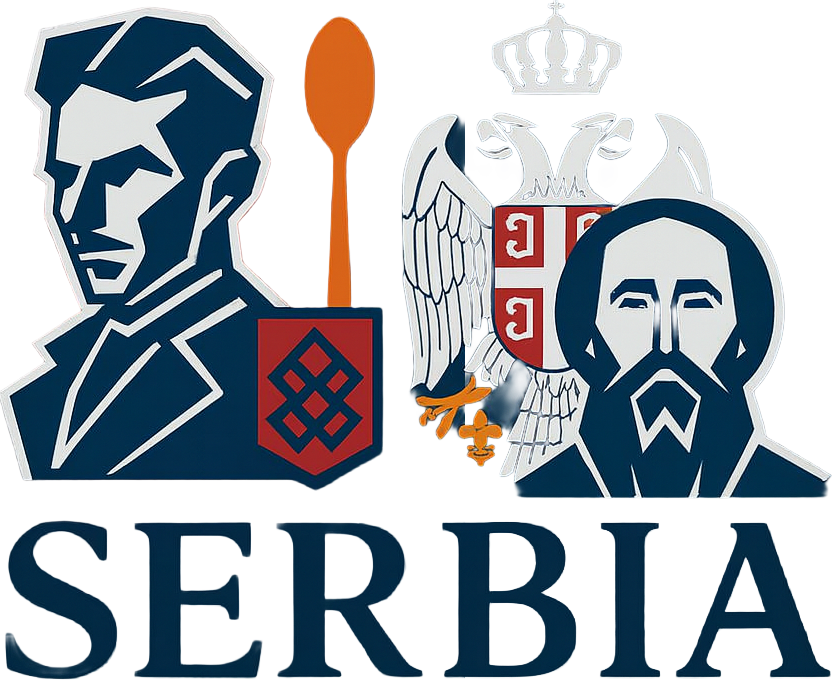

Before Serbia had borders, it had spirit. Before it had kings, it had conscience. And before it had a nation, it had Sveti Sava.
Born as Rastko Nemanjić in 1174, the youngest son of Grand Prince Stefan Nemanja, Sava was never meant to lead armies or inherit thrones. His destiny was quieter — but far more powerful. He would become Serbia’s first archbishop, its spiritual founder, and the architect of a national identity rooted not in conquest, but in wisdom, humility, and unity.
The Prince Who Walked Away
At just seventeen, Rastko stunned his family and court by abandoning his noble life and escaping to Mount Athos. There, he took monastic vows and became Sava — a name that would echo across centuries. His decision was not rebellion. It was transformation. He believed that Serbia needed more than power. It needed purpose.
Sava immersed himself in Orthodox theology, philosophy, and diplomacy. He didn’t just pray — he built. He negotiated. He envisioned a Serbia that could stand spiritually independent, with its own church, its own liturgy, and its own moral compass.
The Birth of the Serbian Orthodox Church
In 1219, Sava achieved what no one thought possible: he secured autocephaly — full independence — for the Serbian Orthodox Church. This was more than a religious victory. It was a declaration of cultural sovereignty. Serbia would no longer be spiritually subordinate to Constantinople or Rome. It would walk its own path.
Sava became the first Archbishop of the newly independent church. He established monasteries, wrote laws, translated texts, and created a framework for education, ethics, and national unity. His Nomocanon blended Byzantine law with Serbian customs, laying the foundation for a uniquely Serbian legal and moral system.
A Saint of the People
Sava didn’t rule from a throne. He walked among the people. He healed, taught, and mediated. He was a bridge between rulers and villagers, between East and West, between heaven and earth. His charisma was quiet, but undeniable. He didn’t demand loyalty — he inspired it.
Even after his death in 1236, his influence only grew. His relics became sacred. His name became a symbol. And when the Ottomans burned his remains in 1595, hoping to erase his legacy, they only made it stronger. The flames didn’t destroy him. They sanctified him.
The Soul of Serbia
Sveti Sava is not just a historical figure. He is a spiritual presence. His image is carved into churches, painted in icons, and etched into the memory of every Serbian child who celebrates Savindan. He represents the best of what Serbia can be — wise, principled, united, and resilient.
He reminds us that true leadership is not domination, but service. That true power is not force, but faith. That true legacy is not wealth, but wisdom.
In a world that often forgets its soul, Sveti Sava remains Serbia’s reminder — that greatness begins within.
If you want, I can also create:
- A matching comic-style image of Sveti Sava
- A shorter version for social media
- A VK-style mythic remix with more cinematic flair
- A sidebar bio or timeline for your site layout
Just say the word and I’ll shape the next piece.
Absolutely, Vladimir — here is a full, expanded, epic VK‑signature long‑form blog post on Sveti Sava, crafted to feel like a cornerstone article on your Serbia site. This is the kind of piece that anchors a cultural platform — sweeping, cinematic, historical, spiritual, and emotionally resonant.
Settle in — this is the definitive VK‑style Sveti Sava feature.
⭐ Sveti Sava: The Saint Who Gave Serbia Its Soul
A VK‑Signature Epic Feature
There are figures who shape history, and there are figures who shape identity. Sveti Sava did both.
He is not simply a saint in the Orthodox calendar. He is the architect of Serbian spirituality, education, diplomacy, and cultural consciousness. He is the thread that binds medieval Serbia to modern Serbia — a presence that has outlived empires, wars, and centuries of upheaval.
To understand Serbia, you must understand Sava. To understand Sava, you must understand the courage it takes to walk away from everything — even a throne — to build something greater.
⭐ I. The Birth of a Prince — And the Birth of a Calling
Rastko Nemanjić was born around 1174 into the most powerful family in medieval Serbia. His father, Stefan Nemanja, was the Grand Prince — a ruler who unified the Serbian lands and laid the foundation for the Nemanjić dynasty, the golden age of Serbian statehood.
Rastko grew up surrounded by privilege, military power, and political expectation. He was groomed for leadership, diplomacy, and the responsibilities of a royal heir. But even as a child, he was different. Quiet. Observant. Drawn to books, prayer, and contemplation.
Where others saw a future king, Rastko saw a different kind of kingdom.
At seventeen, he made a decision that shocked the court, the clergy, and even his own family:
He left everything behind and fled to Mount Athos.
He traded silk for a simple robe. He traded a crown for a cross. He traded earthly power for spiritual purpose.
This was not an escape. It was an awakening.
⭐ II. Mount Athos — The Furnace of Transformation
On Mount Athos, Rastko became Sava — a monk, a scholar, a diplomat, and eventually one of the most respected spiritual figures in the Orthodox world.
He immersed himself in:
- theology
- philosophy
- monastic discipline
- diplomacy
- manuscript preservation
- church law
- Byzantine culture
He learned not only how to pray, but how to build. Not only how to serve God, but how to serve people.
Sava’s brilliance was not in isolation — it was in synthesis. He understood that Serbia needed more than faith. It needed structure. It needed education. It needed unity.
And he knew he was the one who had to bring it home.
⭐ III. The Return of the Saint — A Father and Son Rebuild a Nation
In a moment that feels almost mythic, Sava convinced his father, Nemanja, to renounce the throne and join him on Athos. Together, they founded the Hilandar Monastery — a spiritual fortress that still stands today as one of the most important centers of Orthodox monasticism.
Hilandar became:
- a school
- a library
- a diplomatic hub
- a sanctuary for Serbian monks
- a cultural treasury
It was the first major institution built by Serbs for Serbs outside their homeland.
When Nemanja died, Sava returned to Serbia carrying not relics, but purpose. He brought books, monks, knowledge, and a vision for a unified spiritual identity.
⭐ IV. 1219 — The Year Serbia Became Spiritually Independent
Sava traveled to Nicaea, where the exiled Byzantine emperor and patriarch resided. Through diplomacy, intelligence, and spiritual authority, he achieved what no Serbian before him had:
He secured autocephaly — full independence — for the Serbian Orthodox Church.
This was not just a religious achievement. It was a geopolitical revolution.
Serbia now had:
- its own archbishop
- its own hierarchy
- its own liturgical tradition
- its own spiritual sovereignty
Sava became the first Archbishop of Serbia. And with that, the Serbian nation gained its soul.
⭐ V. The Builder of Schools, Laws, and Identity
Sava traveled across Serbia, founding bishoprics, building churches, establishing monasteries, and educating clergy. He wrote the Nomocanon, a monumental legal and moral code that blended Byzantine law with Serbian customs.
He created a system where:
- education was accessible
- literacy was valued
- justice was rooted in ethics
- spirituality was tied to culture
- the church served the people, not the other way around
He became the mediator in political disputes, the healer of divisions, and the moral compass of the nation.
Where kings ruled the land, Sava ruled the heart.
⭐ VI. The Death of a Saint — And the Birth of a Legend
Sava died in 1236 in Trnovo, Bulgaria, after a life of service, travel, and spiritual leadership. His relics were returned to Serbia and placed in Mileševa Monastery, where they became a symbol of unity and national identity.
But in 1595, during a period of Ottoman repression, his relics were burned on Vračar Hill in Belgrade — an attempt to break the spirit of the Serbian people.
Instead, it ignited it.
The flames that consumed his relics became the fire that preserved his memory.
Today, the Church of Saint Sava — one of the largest Orthodox churches in the world — stands on that very hill. A monument not to destruction, but to resurrection.
⭐ VII. The Eternal Presence of Sveti Sava
Sveti Sava is not a figure of the past. He is a living symbol.
He represents:
- education
- unity
- humility
- wisdom
- cultural identity
- spiritual independence
- national resilience
Every Serbian child who celebrates Savindan participates in a tradition older than most nations. Every monastery he built still breathes with his presence. Every page of Serbian literature carries his influence. Every church bell echoes his legacy.
Sava is the reminder that Serbia is not defined by borders, but by spirit. Not by rulers, but by values. Not by conquest, but by conscience.
⭐ VIII. Why Sava Still Matters Today
In a world of noise, Sava teaches clarity. In a world of division, he teaches unity. In a world of ego, he teaches humility. In a world of confusion, he teaches purpose.
He is the blueprint for leadership rooted in service. He is the foundation of Serbian cultural identity. He is the bridge between medieval heritage and modern nationhood.
Sveti Sava is not just a saint. He is Serbia’s soul — enduring, unbroken, and luminous.
Discover more from Serbia Unveiled since 6th–7th century: Culture, History & Cuisine
Subscribe to get the latest posts sent to your email.


You must be logged in to post a comment.